Nobody wants to hear "you need a new roof" when a repair would do. And nobody wants to pay for three repairs on a roof that needed replacing two years ago. The good news is that the roof usually tells you which one it is, if someone looks at the whole thing and not just the spot that's leaking.
What decides whether a roof gets repaired or replaced?
How far the damage goes. A roof with one problem area and sound shingles everywhere else is a repair. A roof where the shingles are worn out across every slope, or where the wood underneath has gone soft, is a replacement, even if only one spot is leaking today.
The leak is just where the water found its way in first. The real question is what the rest of the roof looks like.
What are the signs a roof can be repaired?
A repair makes sense when the problem is in one place and the shingles around it still have life in them:
- A few shingles missing or lifted after a storm, with the rest lying flat
- A cracked rubber boot around a plumbing vent pipe
- Lifted or loose flashing at a chimney, wall or skylight
- One leak with a clear source, and dry decking everywhere else
- Shingles that are still flexible, hold their granules and lie flat
Fixing the spot where the water gets in, and matching the shingles around it, is what our roof repair work is for.
What are the signs a roof needs replacing?
Replacement is the right call when the wear is spread across the roof, not sitting in one place:
- Granules piling up in the gutters and bare, dark patches on the shingles
- Shingles curling at the edges or cupping in the middle across whole slopes
- Cracked or brittle shingles that break when they're lifted
- Leaks in more than one place, or a roof that's been patched again and again
- A roof deck that feels soft or sags between the rafters
- More than one layer of shingles already on the roof
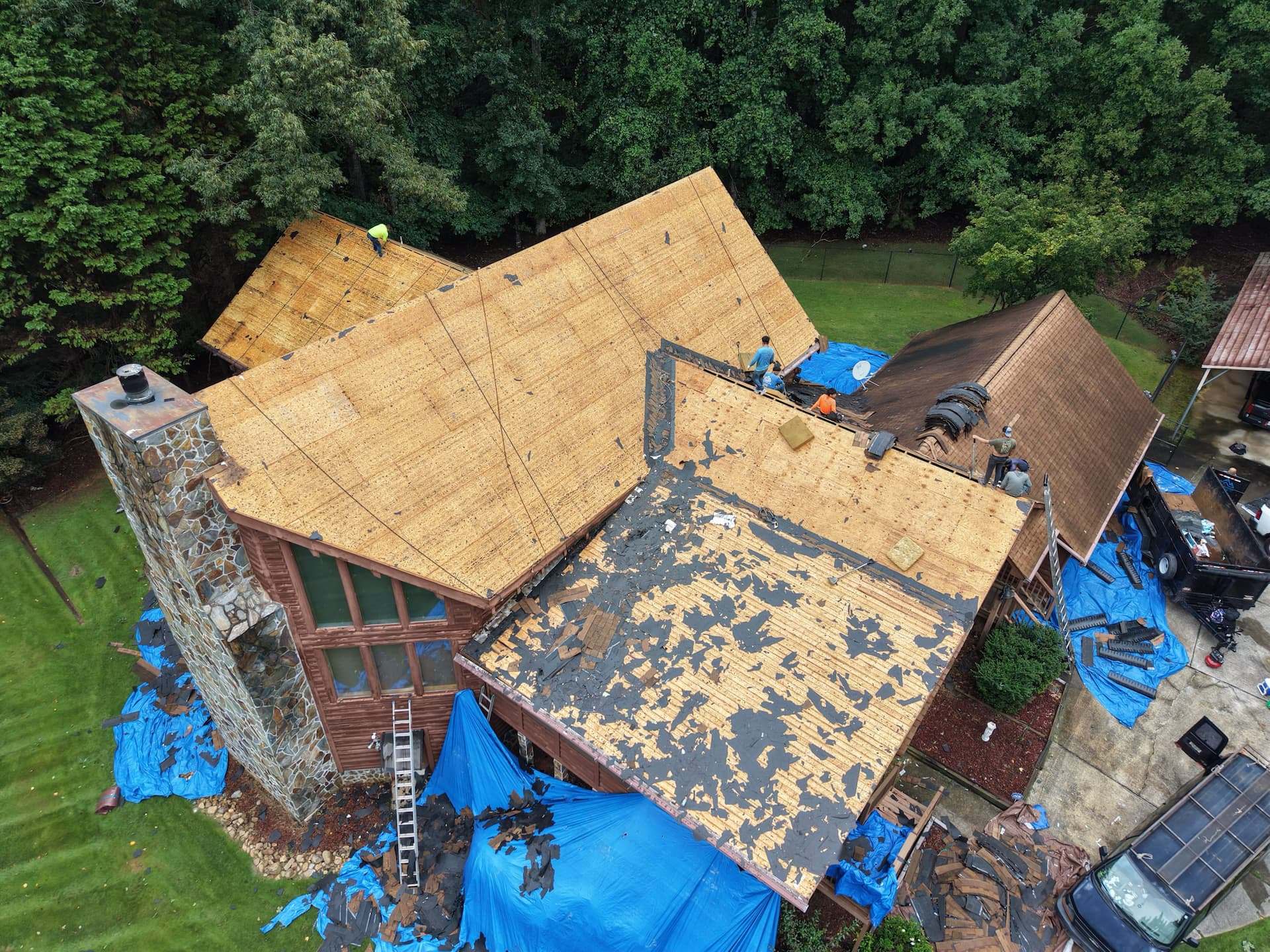
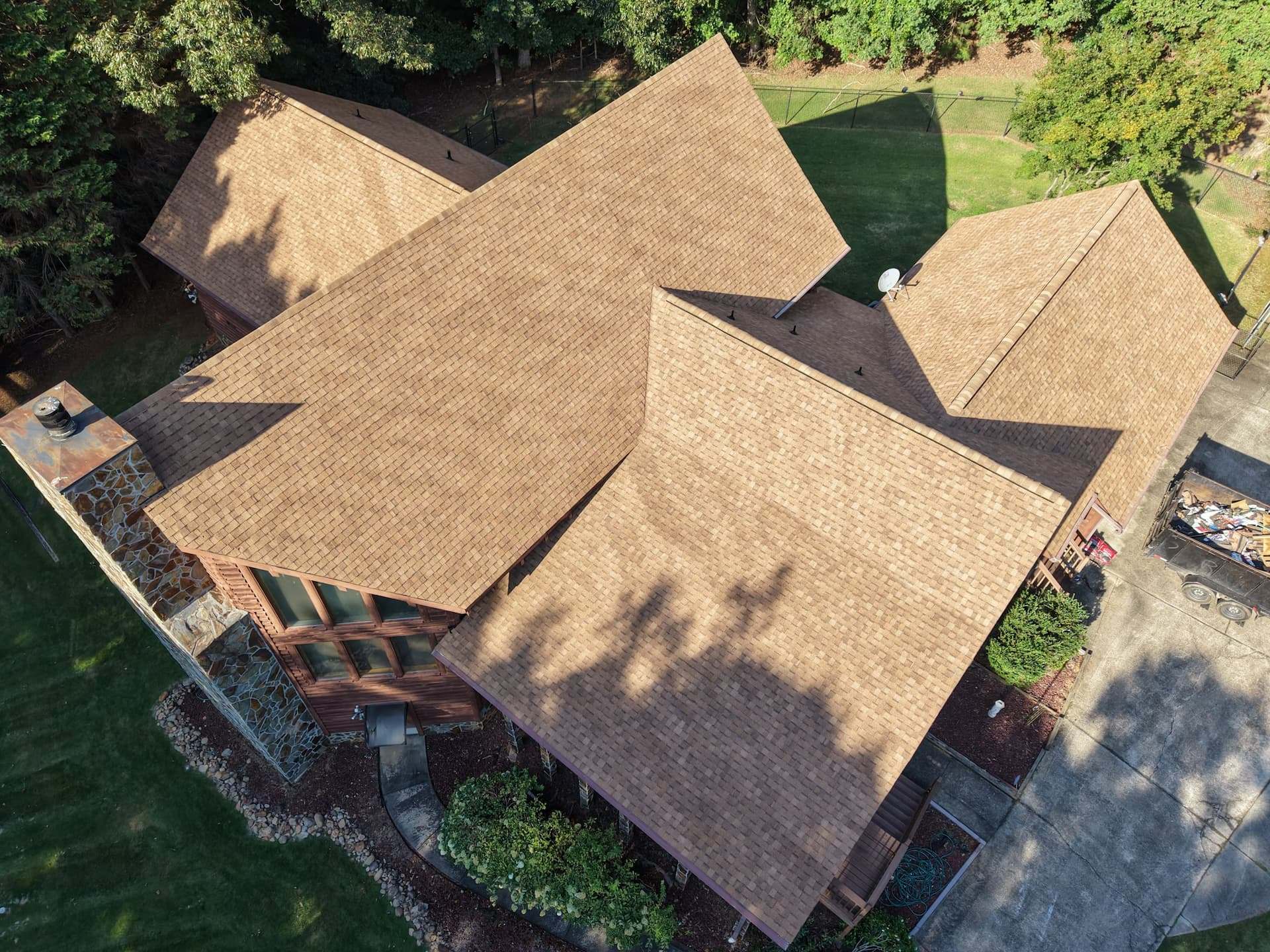
When it's time, our roof replacement work starts with a tear-off down to the wood, so any soft decking gets found and replaced before the new roof goes on.
How does Pennsylvania weather wear out a roof?
Freeze and thaw does most of the damage. Winters here swing above and below freezing again and again. Water gets into a small crack or under a lifted shingle edge, freezes, expands and opens it a little more. Then it thaws and more water gets in. A roof that took one bad winter in stride can be in noticeably worse shape after several.
Ice is the other problem. When snow on the roof melts and the water runs down to the colder edge of the roof, it can freeze again at the eaves and build into a ridge of ice. Water then backs up behind it and under the shingles, which is why some roofs leak in winter at the edges and nowhere else.
Summer heat does its part too. Shingles soften in the sun, harden in the cold, and over the years they lose the granules that protect them. That's the slow, roof-wide wear that eventually turns a repair conversation into a replacement one.
How old is too old for a shingle roof?
There isn't one number, and we won't give you one. Different shingle lines are made to last different lengths of time, and the manufacturer states the expected life for each product in its warranty paperwork. If you know which shingle is on your roof, that's the document to check.
Condition matters more than age. A roof that's lost its granules, curled and cracked is done no matter what the paperwork says. One that's still lying flat and holding its granules may have years left.
If you don't know how old your roof is, the home inspection report from when you bought the house often says. If the last re-roof was done with a permit, the township or borough may have a record of it too. Our guide to roof permits in Bucks County covers which office keeps those records for your address.
How do we work out which one your roof needs?
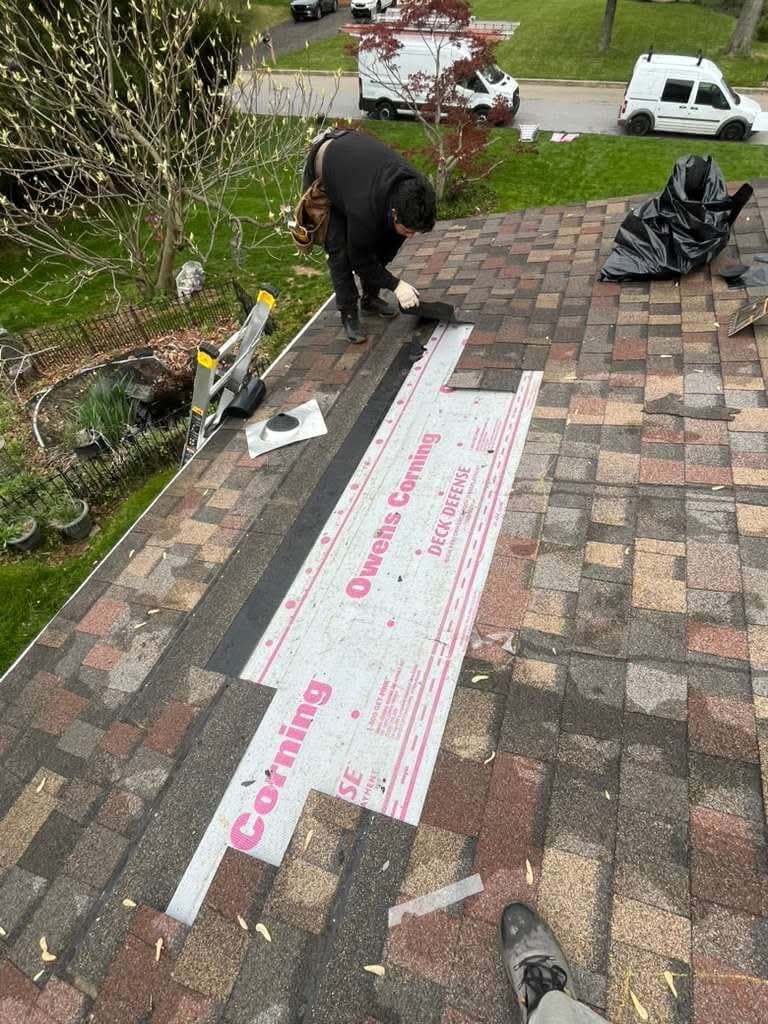
We look at the whole roof, not just the leak. We walk the roof where it's safe to, fly a drone over the whole thing, check the attic if there's access, and photograph what we find. Then we go through the photos with you, so you can see the condition of every slope and not just take our word for it.
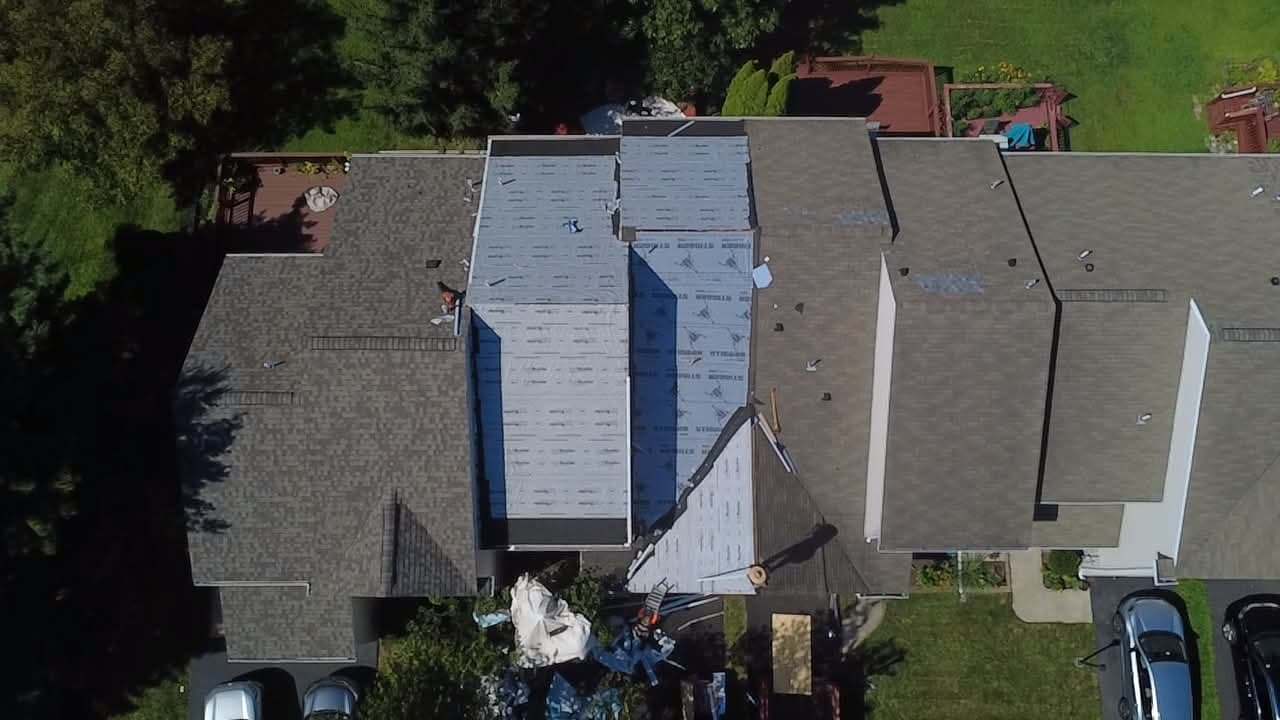
If it needs work, you get a written estimate for the repair or the replacement. If it doesn't need either, we tell you that.
Repair or replacement: how do they compare?
| Compare | Repair | Replacement |
|---|---|---|
| Fits when | The damage is in one area and the rest of the roof is sound | The wear is spread across the roof, or the decking is soft |
| The work | Fix where the water gets in and match the shingles around it | Tear off to the wood, replace soft decking, new underlayment, flashing and shingles |
| What sets the price | The size of the damaged area and what's under it | Size and shape, pitch, layers, decking, flashing and material |
| Permit | Depends on the township and the size of the repair | Often required; depends on the township |
| The risk of waiting | A small leak keeps soaking the decking and insulation | More repairs on a roof that's past saving |
For how a replacement gets priced, factor by factor, see what changes the price of a roof replacement.
What did that look like on real jobs?
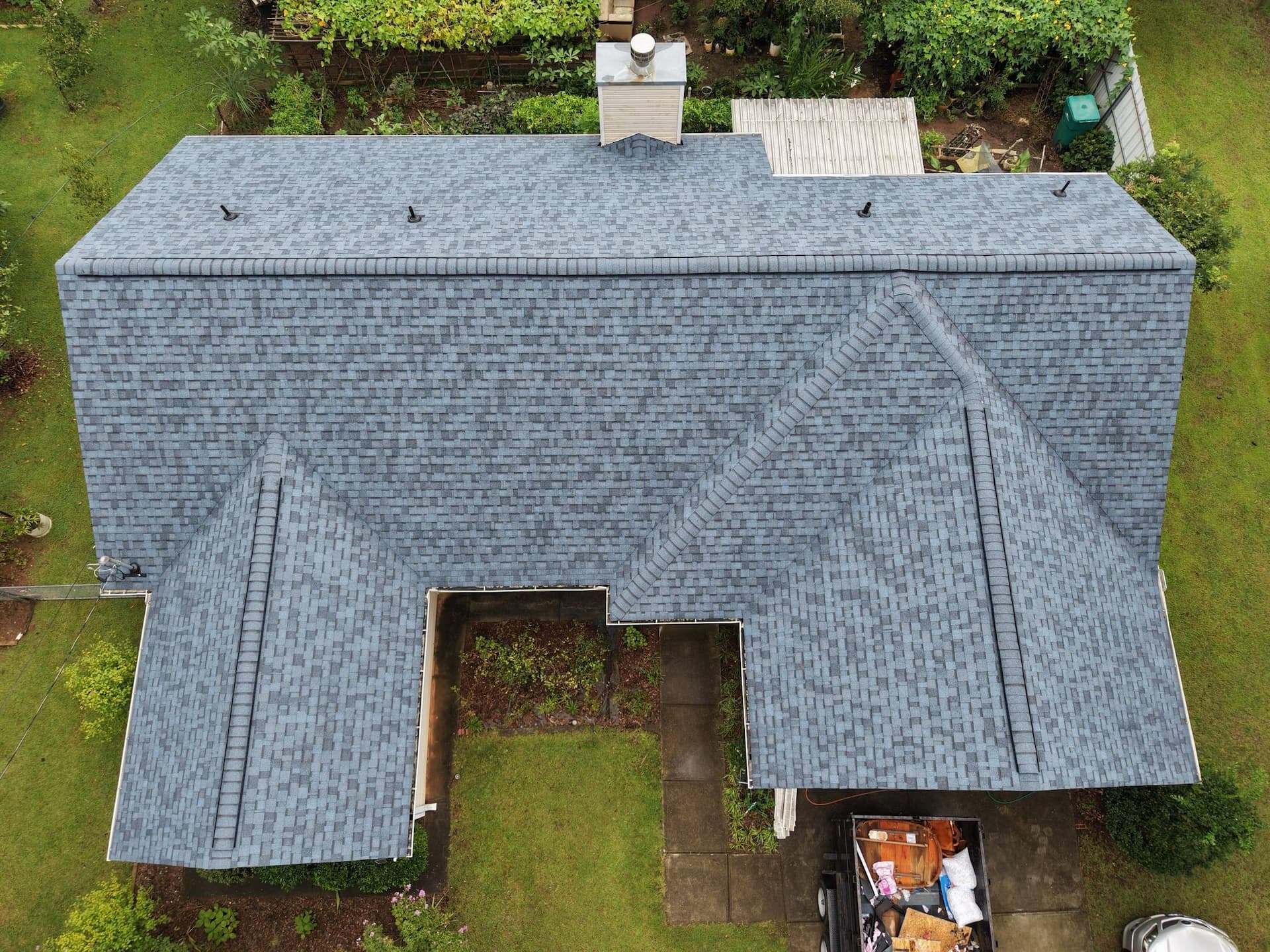
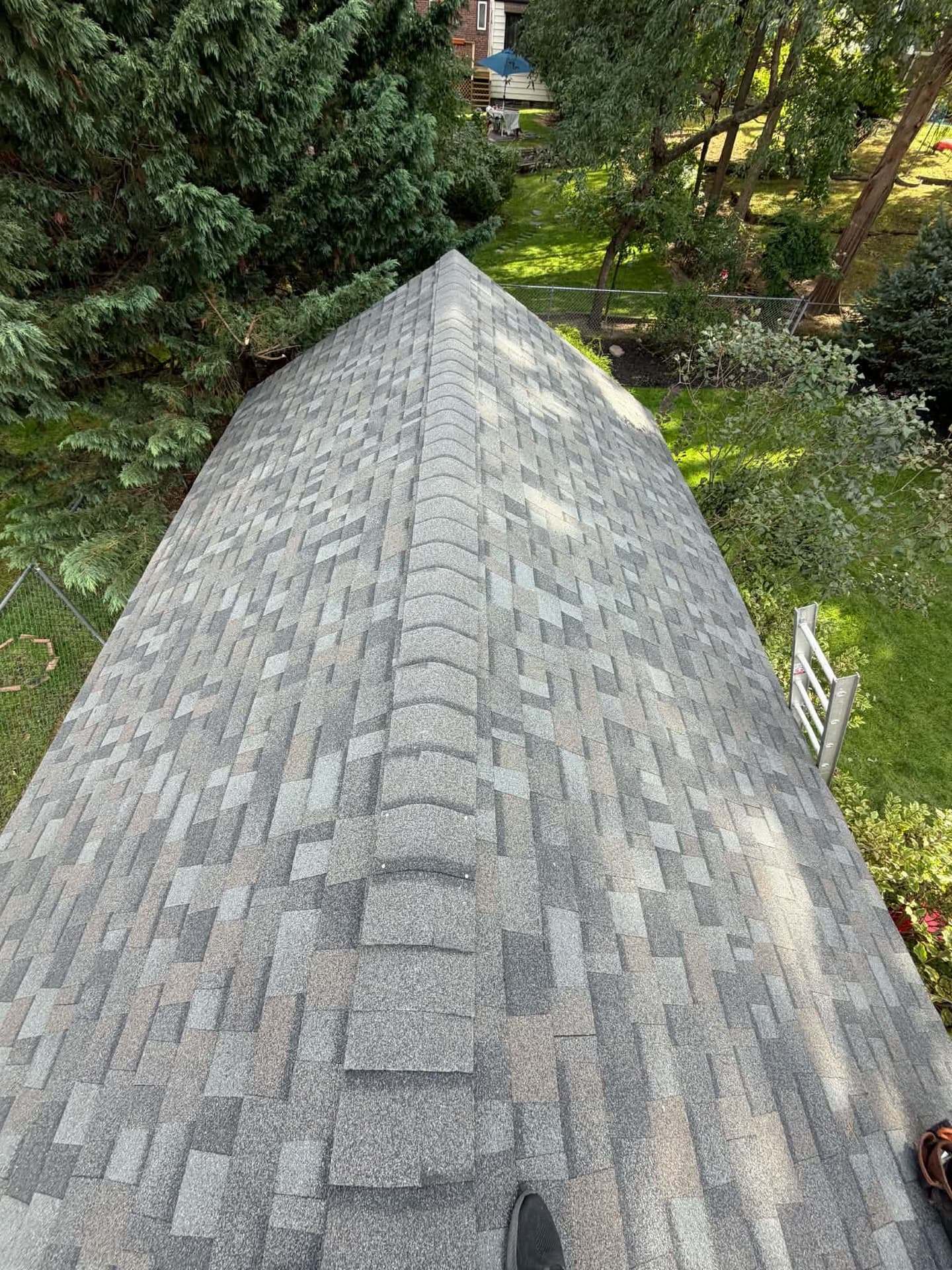
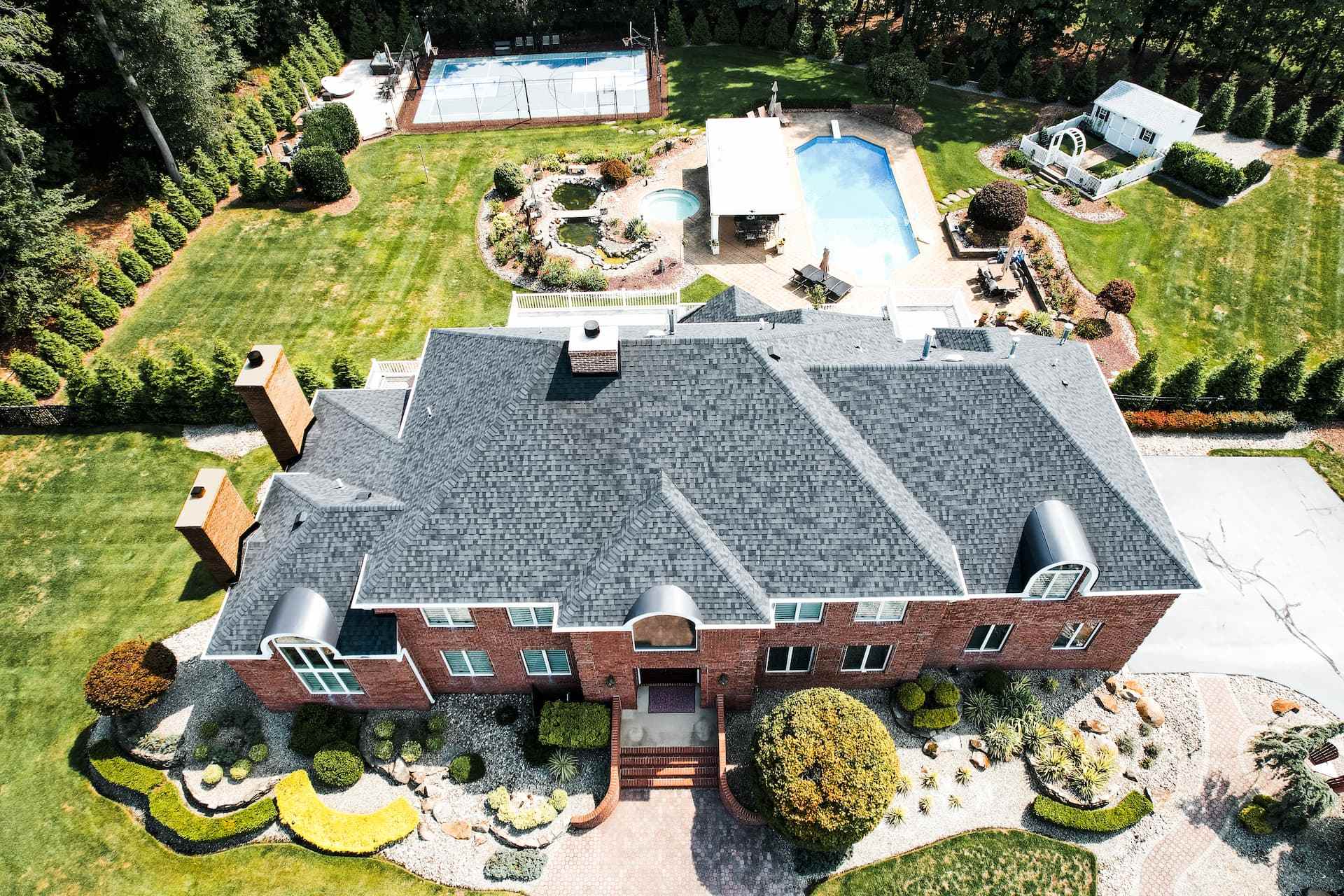
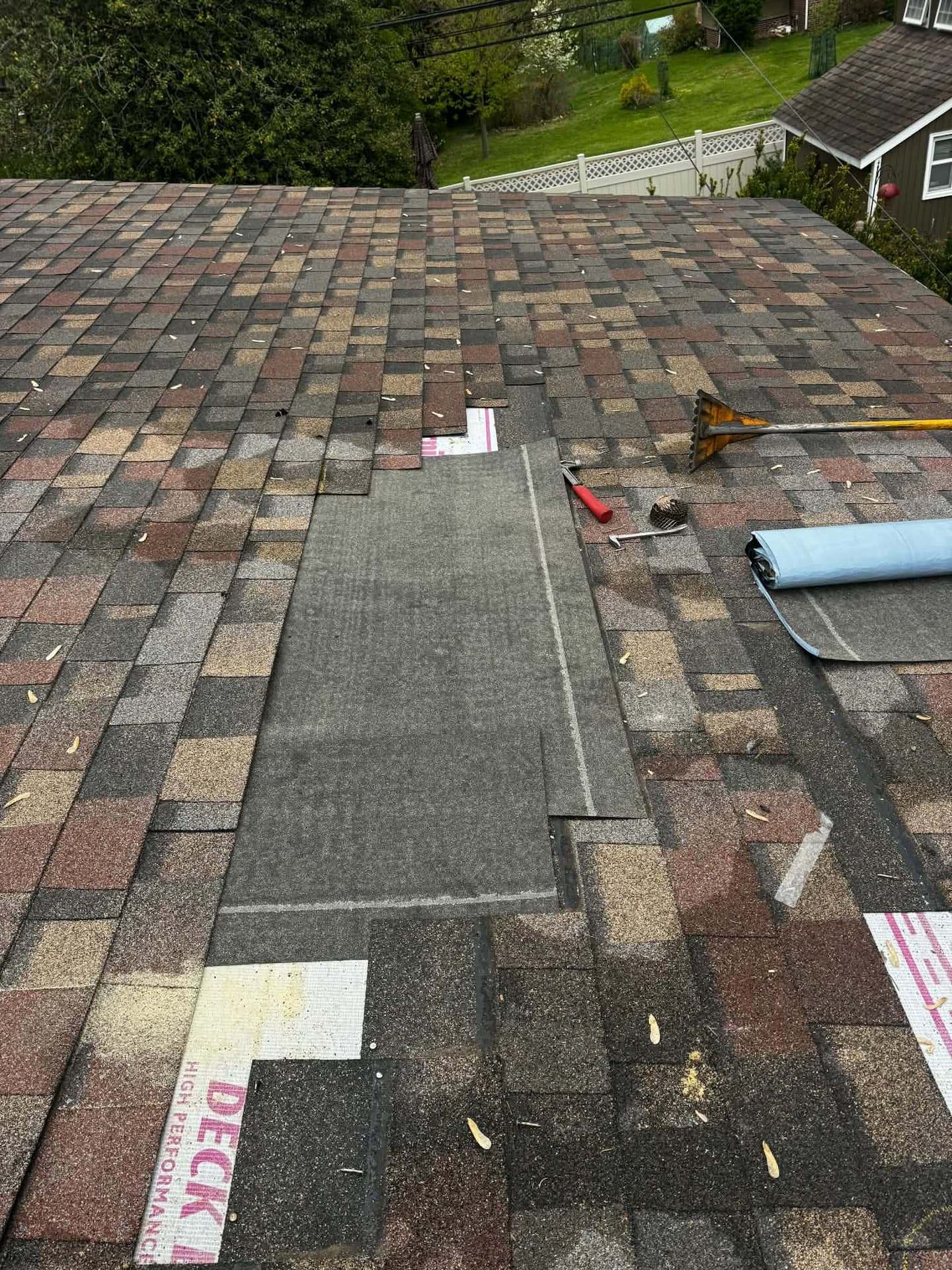
Two jobs from our own work show both ends. In Villanova, the job was a repair on an architectural shingle roof, and the photo shows the ridge after the work was done. In Doylestown, on a single-story home, the job was a full replacement with new architectural shingles.
For local details, including the permit rules in each township, see our pages on roofing in Doylestown and roofing in Villanova.