Most people pick deck boards by looking at samples. That's the right place to finish, not the right place to start. The bigger question is how much time you want to spend on the deck every year, and how long you plan to stay in the house.
What's the real difference between composite and wood?
Wood costs less now. Composite costs less of your time over the years.
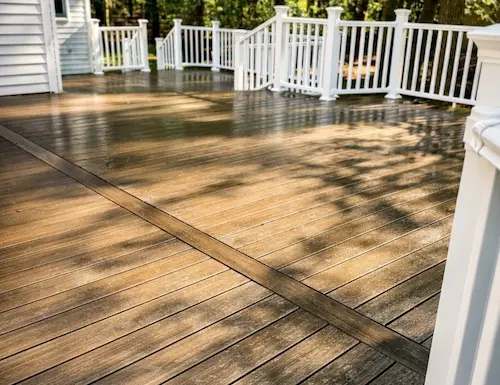
A wood deck is cheaper to build and looks like wood because it is. To stay that way, it needs cleaning every spring and a coat of sealer every couple of years. Composite boards cost more, and the hidden fasteners and railing systems that usually go with them add to the price. What you get back is no sanding and no staining, just a wash once or twice a year.
Underneath, the two decks are the same. The frame is wood either way, and it's built to the same code, with footings below the frost line. That part matters more than the boards, and we'll come back to it.
How do composite and wood decking compare?
| Compare | Composite | Wood |
|---|---|---|
| Upkeep | A wash once or twice a year. No sanding, sealing or staining | Clean every spring, seal when water stops beading, every couple of years |
| Heat in the sun | Can get noticeably warm in direct summer sun, more so in dark colors | Usually stays cooler underfoot |
| Moisture | The boards don't rot, but shaded, damp spots still need washing to stay clean | Soaks up water if the sealer wears off, then cracks and cups |
| Look | Set colors and grain patterns, chosen from the board line | Real wood grain that weathers and can be stained a new color |
| What drives the cost | The board line you pick, hidden fasteners and the railing system | The boards themselves, plus sealer and your time over the years |
| The frame underneath | Wood, built to code, often with joists closer together | Wood, built to code |
Size, stairs, railings and the condition of any existing frame move the price on both. So does the permit, which most townships around here want for a new deck or a rebuild.
How does Pennsylvania weather treat a deck?
Hard, and in three different ways across the year.
Winter brings freeze and thaw. Temperatures here swing above and below freezing over and over. On a wood deck, water that soaks into a crack or an end grain freezes and opens it a little more each time. Underneath, any footing that sits above the frost line gets lifted by frozen ground every winter, and the deck moves with it. That's why our footings go below the frost line, at the depth your township's code sets.
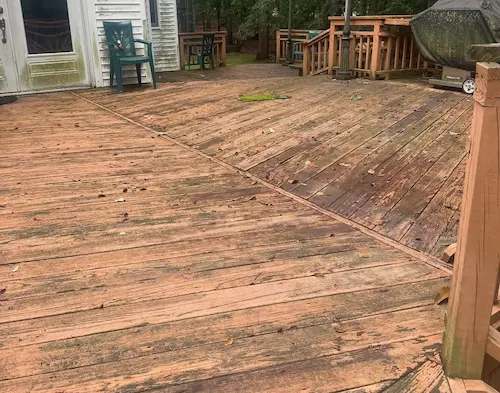
Spring is wet. Water sits on the boards, leaves pile up in the corners, and planters trap moisture against the surface. On wood, that's where moss and rot get started once the sealer wears thin. Composite boards don't rot, but a shaded corner can still grow a film that needs washing off.
Summer is humid and hot. Wood swells and shrinks with the moisture in the air, which is part of why unsealed boards crack and cup. Composite stays stable in the damp, but in full sun it can get warm underfoot, especially in darker colors.
Why does the frame matter more than the boards?
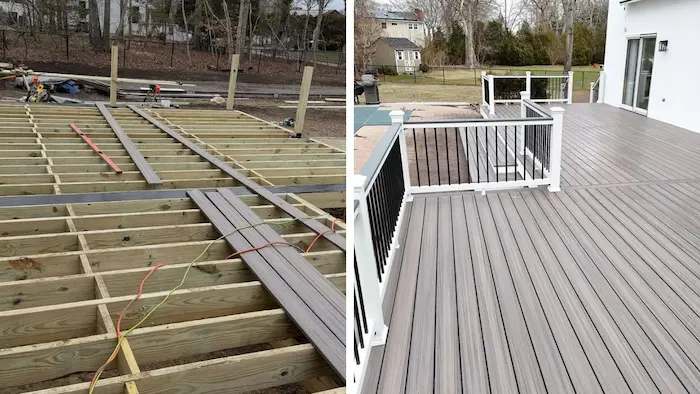
Because composite decks still sit on wood. The joists, beams and posts under both kinds of deck are wood, and the ledger board where the deck bolts to the house is one of the first places we check for rot. A deck can look fine from above and be rotten where it meets the house.
If you're putting composite on an existing deck, the frame has to pass two tests. The joists have to be sound, and they have to be close enough together for composite boards, which usually need tighter spacing than wood. If they pass, we can resurface without rebuilding. If they don't, we tell you before you pay for boards. More on that in our deck repair and restoration work.
When is wood the better call?
Composite isn't the right answer for everyone. Wood makes more sense when:
- The budget is tight now and the deck needs to be built this year
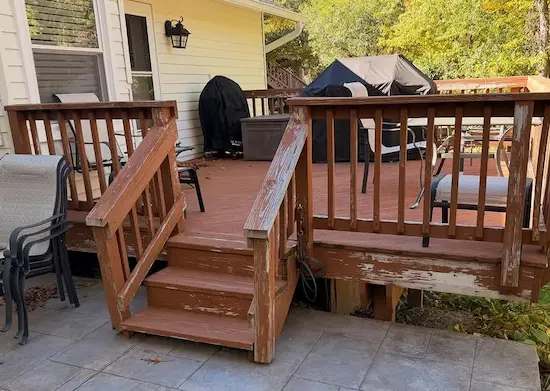
- You want real wood, and you don't mind cleaning and sealing it every couple of years
- You plan to sell the house before the upkeep you'd skip with composite adds up
- The deck is small enough that sealing it is an afternoon, not a weekend
Composite makes more sense when you plan to stay, when the deck gets heavy use, and when you'd rather spend spring weekends on the deck than refinishing it. Our pages on composite deck building and wood deck building cover how we build each one.
Trex or TimberTech?
Both make good composite boards. The differences are mostly in the color range, the board profiles and the price of the line you choose. Each manufacturer publishes its own warranty and installation rules for each line, and those are the documents to compare. We go through the options with you at the estimate.
What have we built?
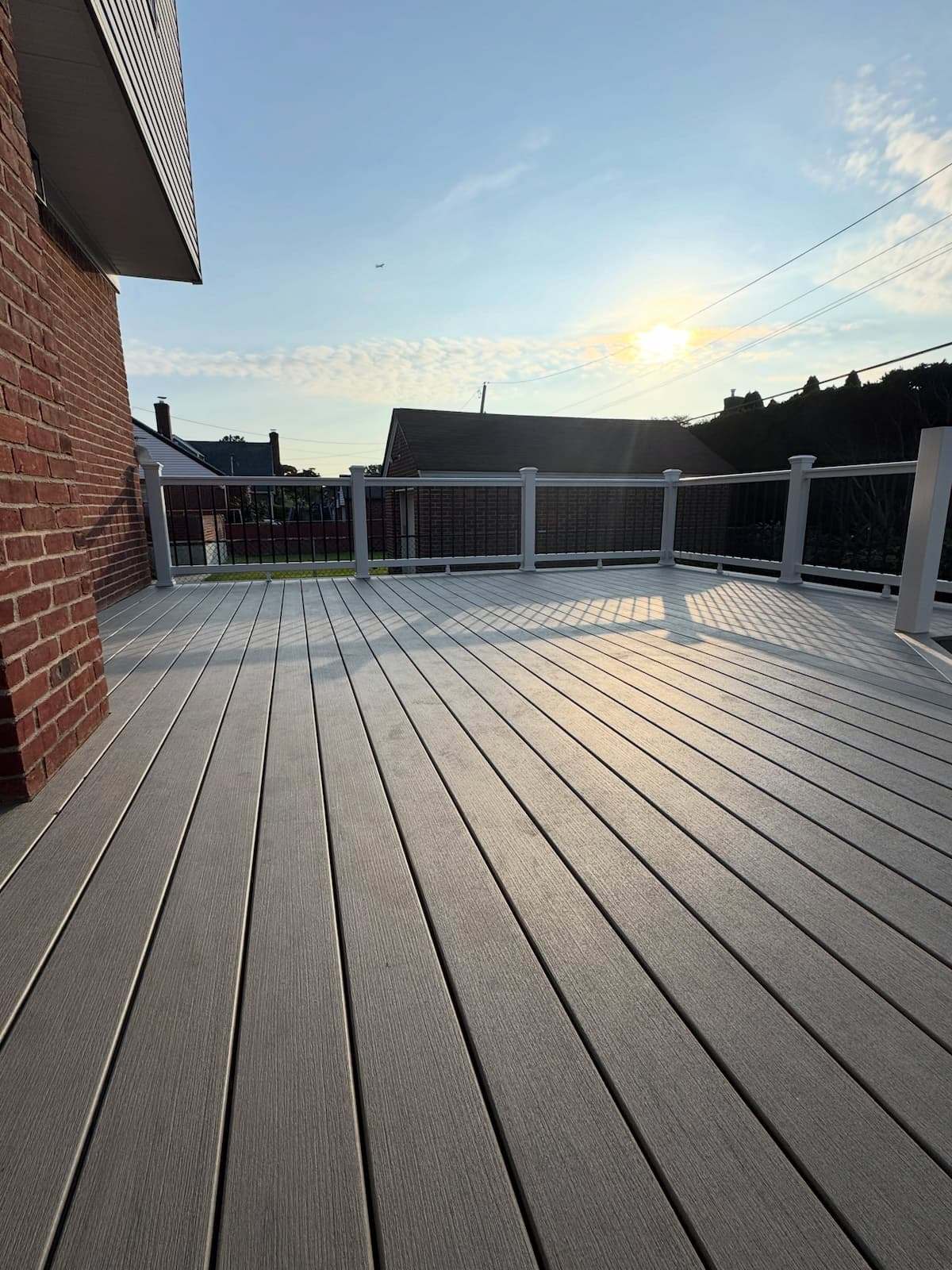
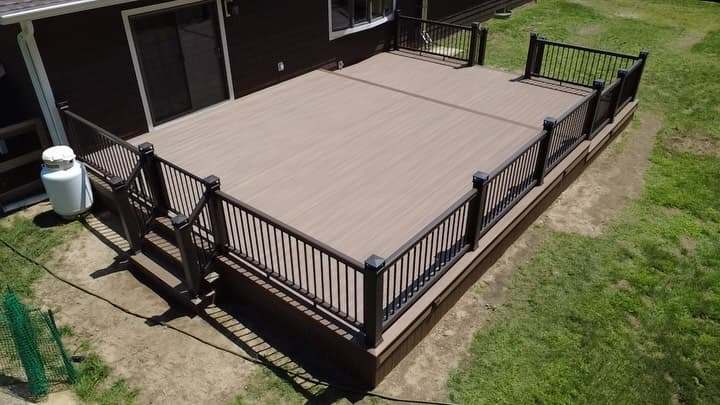
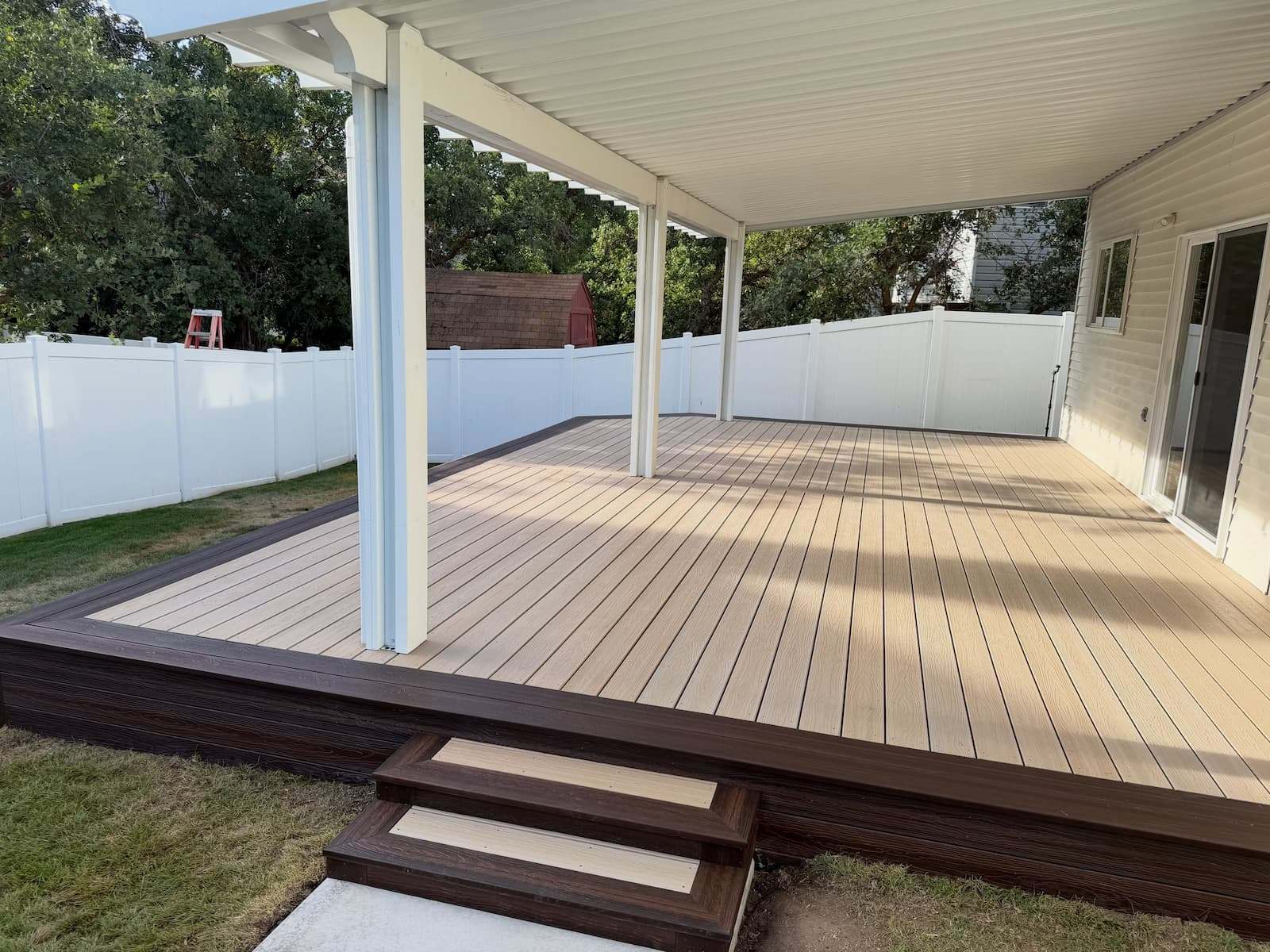
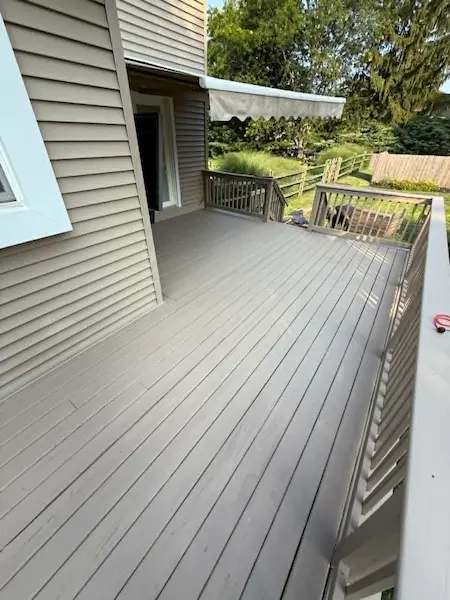
Three of our composite jobs show the range. In Doylestown, we built a Trex composite deck with railing along the back of a brick home. In Villanova, a TimberTech composite deck with black railings. In Wayne, a composite deck replacement under a covered patio roof, with steps down to the yard.
For permits and local details, see our deck pages for Doylestown, Villanova and Wayne.