When a ceiling stain shows up next to a chimney, most people assume the roof is failing. It usually isn't. Water gets in where two materials meet, and a chimney is the place on a house where the most materials meet: brick, mortar, concrete, metal and shingles, all moving a little with every change in the weather.
There are four places it usually comes in. Each one leaves different clues, and each one has a different fix.
Where does water get into a chimney?
Almost every chimney leak starts at one of four spots: the flashing, the crown, the mortar joints or the cap. Here's what each one looks like from inside and outside your house, and how it gets fixed.
| Where it gets in | What you'll see | How it's fixed |
|---|---|---|
| Flashing | A stain on the ceiling or wall right beside the chimney, gaps or old caulk where the metal meets the brick | New step flashing under the shingles and counterflashing cut into the mortar joints |
| Crown | Cracks or missing chunks on the concrete top, water in the fireplace or on the damper | Seal small cracks, or break out a failed crown and pour a new one with a proper overhang |
| Mortar joints | Sandy, recessed or missing mortar, white powder on the brick, damp brick inside the attic | Grind out the bad joints and repoint with mortar that suits the brick |
| Cap | No cap on the flue, a rusted cap, rain, leaves or animals coming down the chimney | A new cap fitted to the flue, often stainless steel |
The white powder is worth a word. It's salt carried out of the masonry by water as the brick dries, so it tells you water is moving through the chimney, even if you haven't found where it ends up inside.
Why is the flashing the most common culprit?
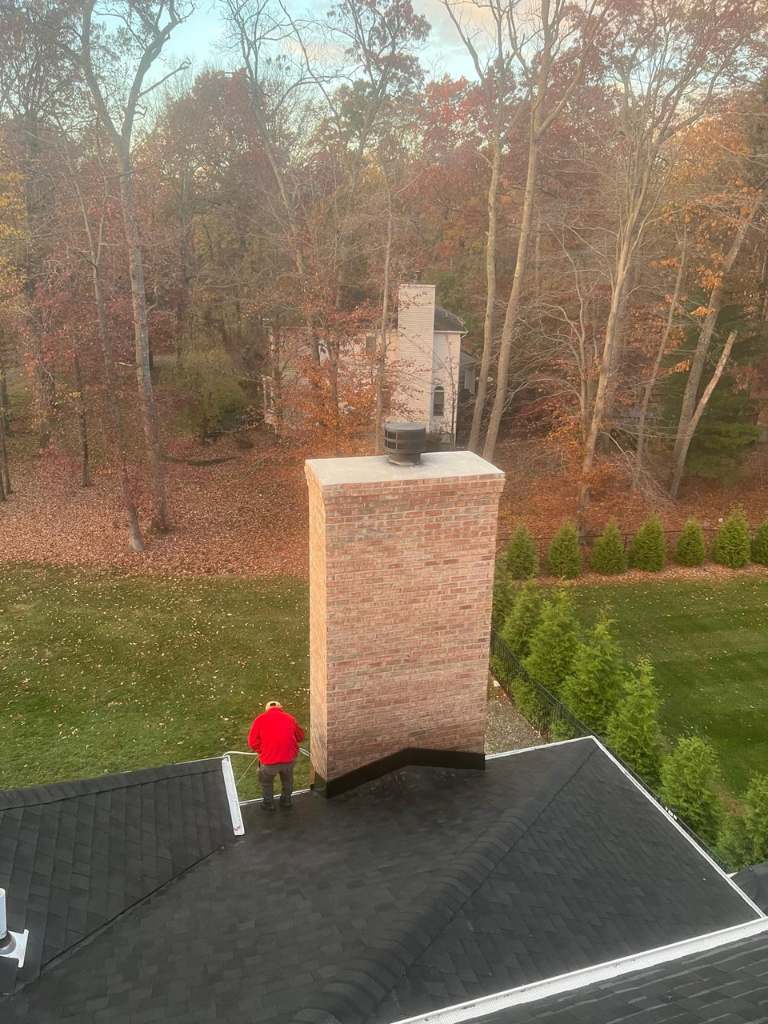
Because it's the one joint that has to stay sealed between two things that move differently. The roof flexes with heat and cold, and the chimney stands still on its own foundation. The flashing bridges that gap, and when it fails, the water runs straight down the outside of the chimney into the house.
Proper chimney flashing comes in two layers. Step flashing is woven in with each course of shingles along the sides. Counterflashing is cut into the mortar joints of the chimney and folds down over the step flashing, so water running down the brick can't get behind it. A bead of caulk where the chimney meets the roof isn't flashing, and it will fail.
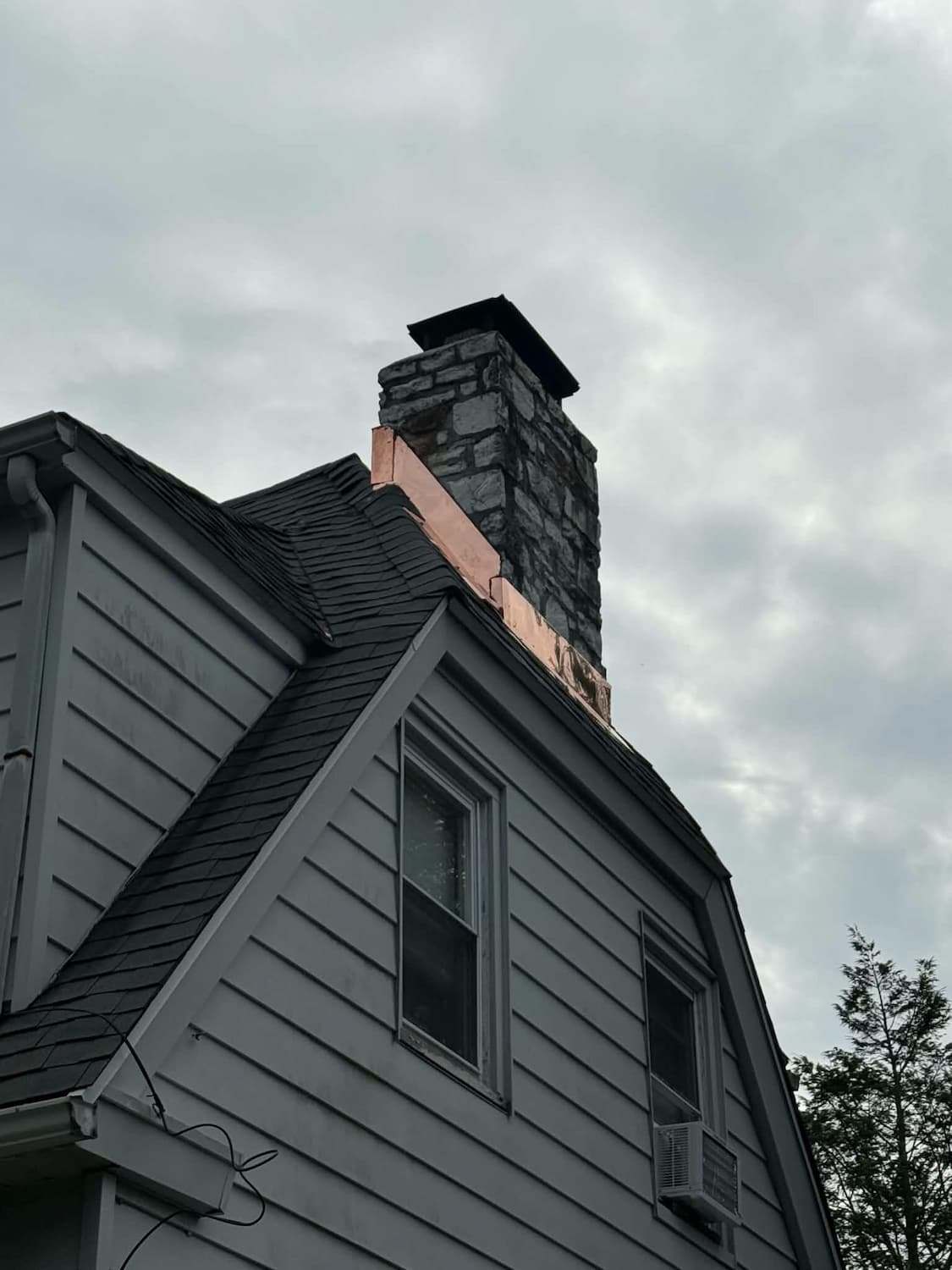
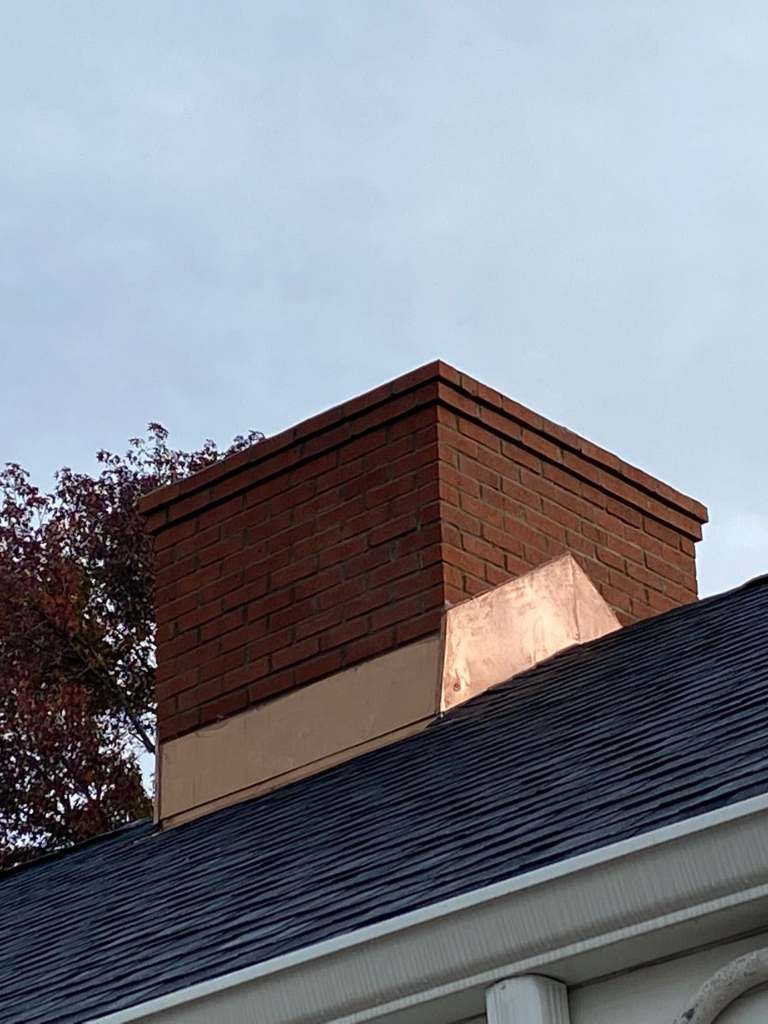
See how we handle chimney flashing and leak repair. On one Bryn Mawr house, the fix was new copper flashing at the roofline.
What does a cracked crown do?
The crown is the slab of concrete or mortar that covers the top of the chimney around the flue. It's supposed to shed water off the chimney and away from the brick. Once it cracks, every rain runs straight down into the masonry below it, and in winter that water freezes and opens the cracks wider.
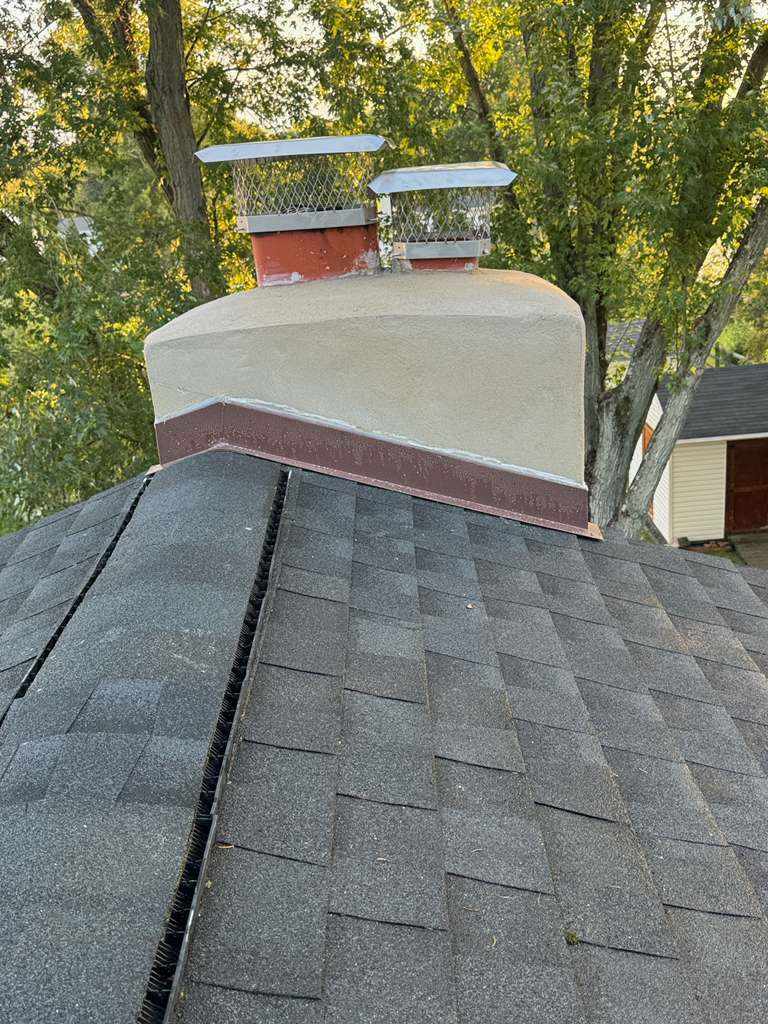
A missing or rusted cap makes it worse. The cap sits over the flue and keeps rain, leaves and animals out. Without one, rain drops straight down the flue and shows up in the fireplace. We repair or replace both; see chimney caps and crowns.
When is it the mortar?
When the joints between the bricks have worn away. Winters here swing above and below freezing over and over. Water gets into a worn joint, freezes, and pushes it open a little more each time. Left long enough, the damage moves from the mortar into the brick itself.
The fix is repointing: grinding out the bad mortar and packing the joints with new mortar. On older brick, the new mortar should be softer than the brick around it. The National Park Service's guidance on historic masonry says the same thing, because hard mortar on soft old brick pushes the damage into the brick. If your chimney is on an older house, our guide to chimney repair or rebuild on historic homes goes deeper on that choice.
How do you find out which one is leaking?
Work from the clues to the source. You can do the first four steps yourself; the last one needs someone on the roof.
- Notice when it leaks. Every rain, only hard wind-driven rain, only when snow is melting, or on dry days too. Dampness on dry days can point to condensation inside the flue, which is a different problem from a rain leak.
- Notice where it shows up. A stain on the ceiling or wall beside the chimney usually means flashing. Water in the firebox or on the damper usually means the crown, the cap or the flue.
- Look from the ground. With binoculars, check for gaps or caulk where the metal meets the brick, cracks on the crown, a missing cap and recessed mortar joints.
- Check the attic after a rain. Find the wet wood and note which side of the chimney it's on. Water runs along rafters, so the wet spot can be a few feet from where the water comes in.
- Have it water tested. A roofer runs a hose on one part of the chimney at a time, starting low at the flashing and working up, while someone inside watches for water. When it shows up, you've found the source.
What not to do is caulk every seam you can reach and hope. It hides the clues and doesn't fix the cause.
Is a chimney leak different in Levittown or on the Main Line?
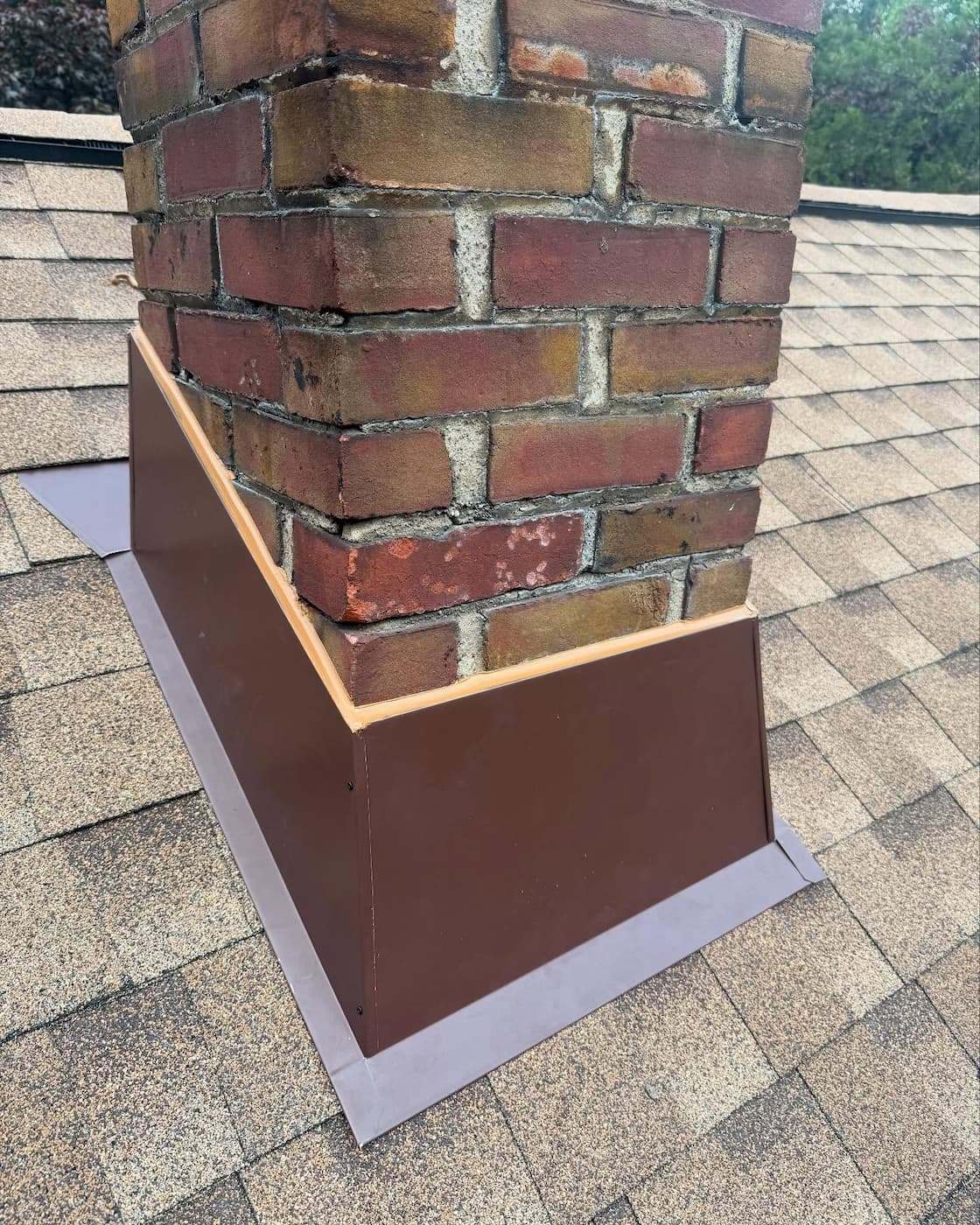
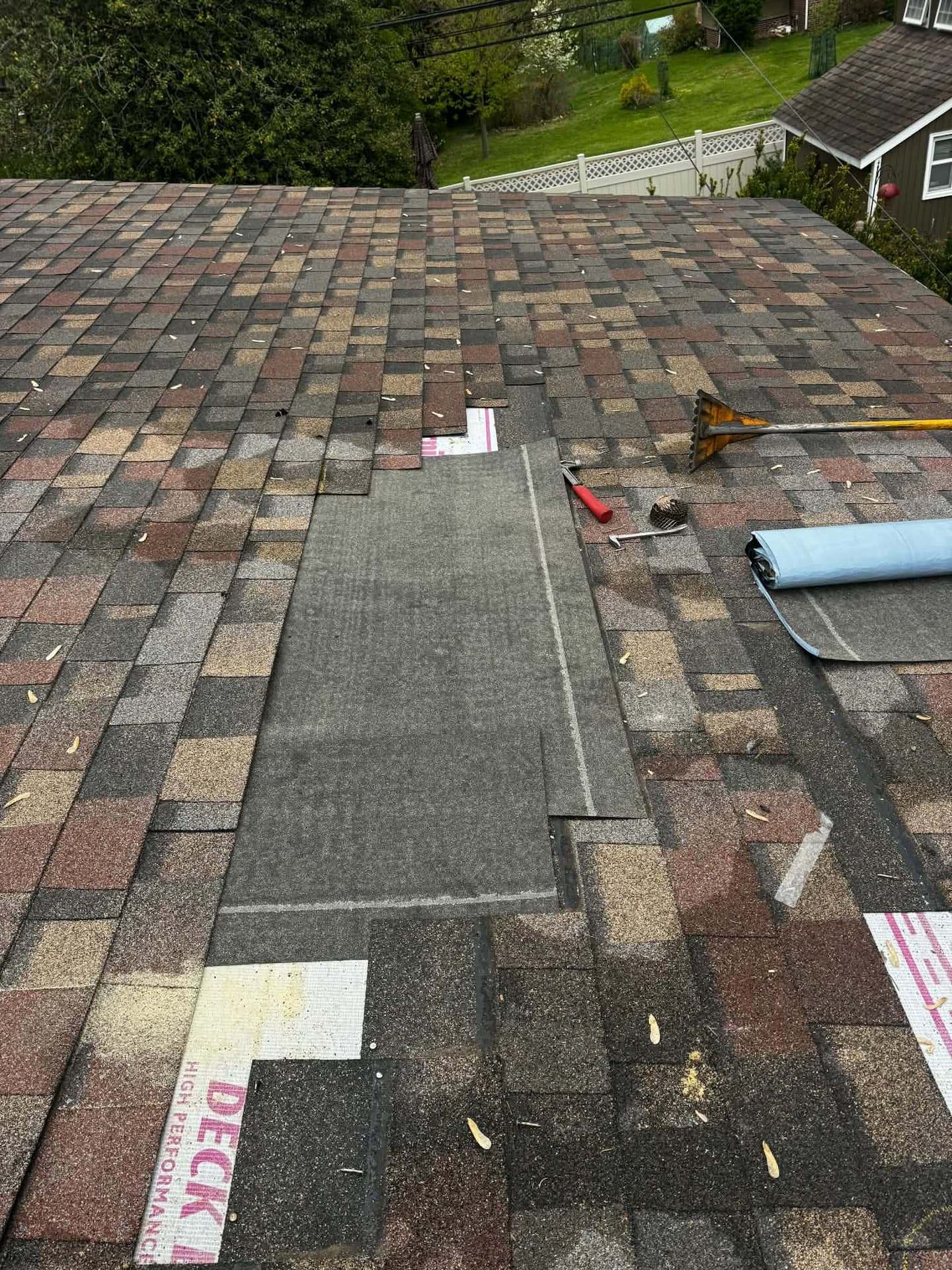
The four causes are the same everywhere, but the houses differ. Levitt & Sons built Levittown between 1952 and 1958, so a chimney there can have decades of freeze and thaw on its flashing and mortar. On one Levittown chimney, we wrapped new aluminum trim around the base. In Bryn Mawr, close to four in ten homes were built before 1940, and on brick that old, repairs have to match the original materials. On one Bryn Mawr house, we put in new copper flashing at the roofline.
For the permit side and local details, see our pages on chimney work in Levittown and chimney work in Bryn Mawr.